
AI Decision Systems: Building Trust Through Explainability
Implementing an explainable AI framework for a financial services firm that increased model adoption from 30% to 85% among analysts.
The Challenge
A financial services firm had invested heavily in ML models for credit risk assessment, but analyst adoption was stubbornly low at 30%. Analysts didn't trust the models because they couldn't understand why specific recommendations were made. When models disagreed with analyst intuition, analysts defaulted to manual assessment, negating the efficiency gains the models were designed to provide.
Our Approach
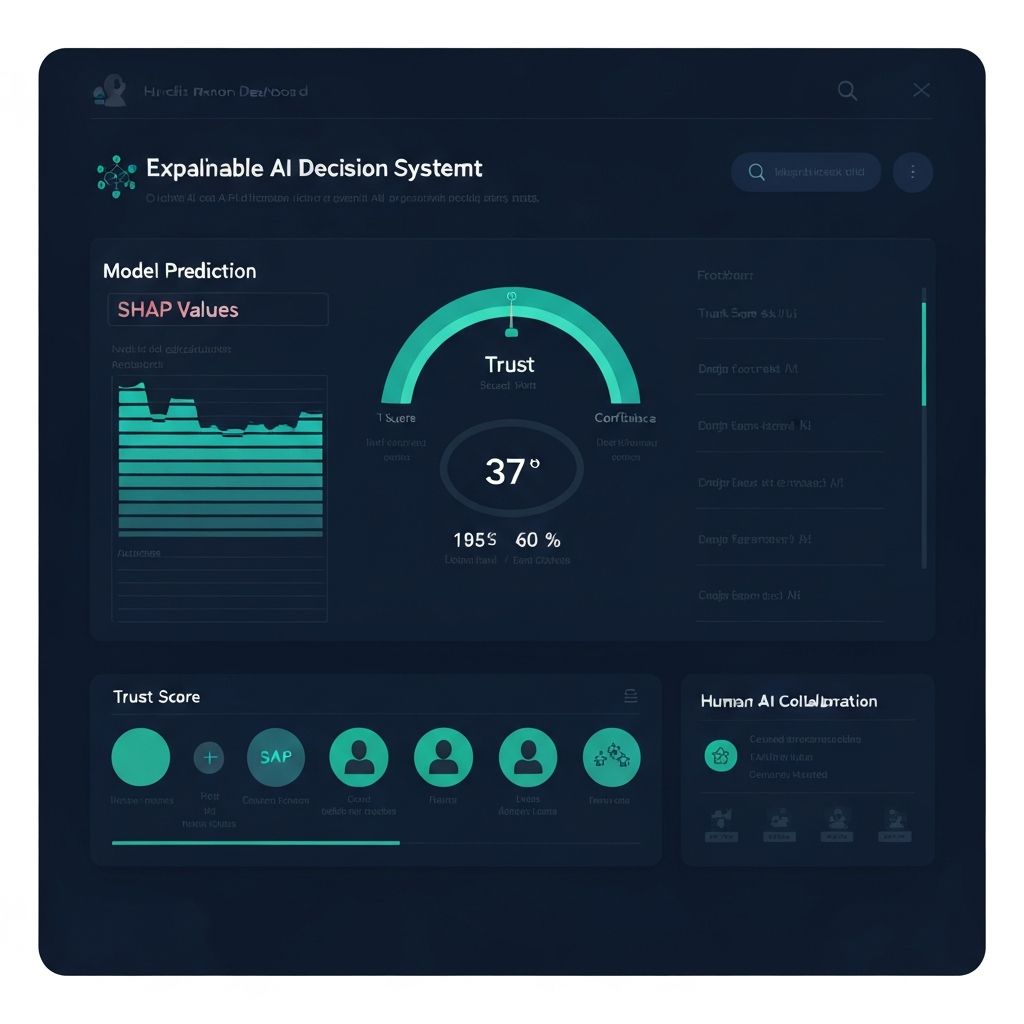
We built an Explainable AI (XAI) framework that wrapped existing models with interpretability layers. Rather than replacing the models, we augmented their outputs with human-readable explanations.
SHAP Integration: Every model prediction was accompanied by SHAP (SHapley Additive exPlanations) values showing which features contributed most to the decision. These were visualized as intuitive waterfall charts in the analyst interface.
Counterfactual Explanations: For borderline cases, the system generated "what-if" scenarios: "This application was declined, but would be approved if the debt-to-income ratio decreased from 45% to 38%." This helped analysts understand the decision boundary and have productive conversations with applicants.
Model Performance Dashboard: A monitoring dashboard tracked model accuracy, drift, and fairness metrics in real-time. Analysts could see how models performed on different population segments and flag concerns directly through the interface.
Feedback Loop: Analysts could record agreement or disagreement with model recommendations, along with their reasoning. This feedback was incorporated into model retraining cycles, creating a virtuous improvement loop.
Results
- Model adoption increased from 30% to 85% within 6 months
- Decision consistency improved by 40% across the analyst team
- Processing time reduced by 55% per application
- Model accuracy improved by 8% through analyst feedback integration
The framework has since been extended to three additional model domains within the firm and is now considered a required component for any new ML deployment.
Facing a similar challenge?
Let us discuss how our experience in this domain can help your organization achieve similar results.
Start a Conversation